
From Australian homes to commercial assets: the adaptation challenge
By Karl Mallon, CEO, The Climate Risk Group (XDI, Climate Valuation)
This past weekend, The Sydney Morning Herald and The Age published a major investigation into one of the defining challenges facing Australia: how we adapt to a climate that has already changed.
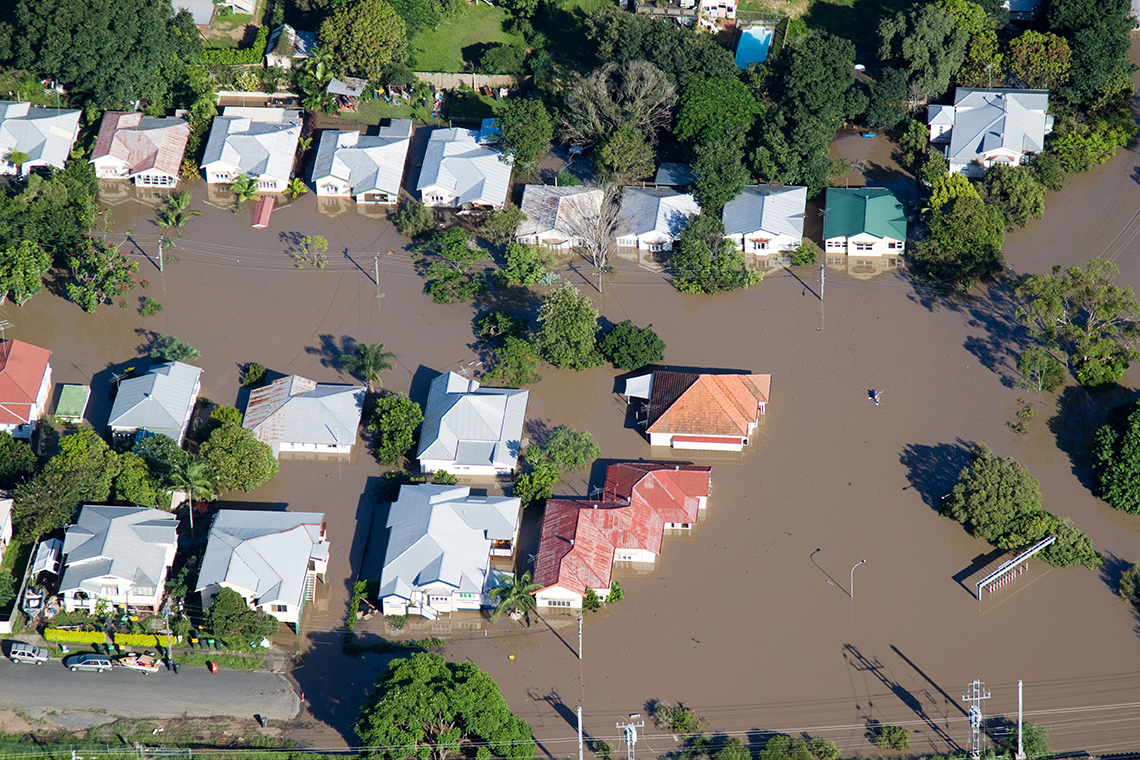
The stories make that risk painfully real: families trapped in homes that have flooded before and will flood again; people unable to insure, sell or move; and councils under pressure to provide more housing when some of the most affordable land is also among the most exposed.
But this is not only a problem for homeowners and governments.
The same hazards threaten commercial property, infrastructure, business operations, lending portfolios, investments and supply chains. For companies managing hundreds or thousands of assets, the challenge is not simply identifying which ones are exposed. It is determining which are genuinely vulnerable, where greater resilience could materially reduce future losses, and where limited adaptation capital should go first.
That is the challenge XDI was created to help solve.
We built this organisation for adaptation
The Climate Risk Group is an independent, mission-led organisation. We exist because we care about protecting people, the assets they depend on and the planet that sustains them.
Adaptation was not something we discovered when it became commercially fashionable. It has been embedded in our work, and built into our systems, from the beginning.
We established Climate Valuation to give homeowners and homebuyers access to information about the physical climate risks affecting individual properties. We established XDI to help companies, governments, banks and investors understand and act on those risks across commercial assets, infrastructure and entire portfolios.
The audiences are different, but the purpose is the same: give people information they can use to make better decisions before the damage occurs.
That last part matters. For too long, the climate-risk conversation has concentrated on identifying exposure: where it will flood, where heat will intensify, and which assets sit in the path of cyclones, bushfires or coastal inundation. Those are essential questions. But they are not enough.
The harder questions are: What can we do about it? Which measures will materially reduce the risk? What will they cost? And where should we act first?
We cannot protect everything in the same way
One of the uncomfortable truths running through the SMH and Age investigation is that Australia cannot protect every place from every hazard at any cost.
Some assets can be made significantly more resilient. Some will require major investment. In some locations, the cost of adaptation may eventually outweigh the value that can be protected.
Avoiding those decisions does not make them disappear. It simply ensures they are made later, under greater pressure and usually at much greater cost.
Yet adaptation investment is still too often driven by what has just happened, what is easiest to fund or which asset owner makes the most noise. We continue to spend vast sums cleaning up and rebuilding after disasters while investing far less in understanding and reducing the risk beforehand.
This is also a commercial problem.
We need to become much better at distinguishing between background exposure and material vulnerability, and at identifying where intervention can actually change the outcome.
Adaptation is essential, but it is not surrender
There is a dangerous idea that focusing on adaptation means giving up on reducing emissions. It does not. We must do both.
We need to reduce emissions rapidly because every additional fraction of a degree makes adaptation harder, more expensive and, in some places, ultimately impossible. At the same time, the warming already locked into the system means adaptation can no longer be postponed.
Nor should the cost fall solely on households, taxpayers and exposed businesses. The fossil-fuel industry has generated enormous profits from the activities driving the climate crisis. It is entirely reasonable that it should bear a meaningful share of the growing cost of protecting communities, strengthening infrastructure and recovering from climate-fuelled disasters.
The people featured in this investigation did not create this problem, yet many are being left to carry its consequences almost alone. That cannot be our adaptation strategy.
Information must lead to action
The great achievement of the Sydney Morning Herald and The Age investigation is that it makes the adaptation challenge difficult to ignore. The next step is to act on it.
Homeowners need clear, accessible information about their properties. Governments need to stop approving development that locks in tomorrow’s disasters. Banks and investors need to understand the risks embedded in their portfolios. Companies need to identify where resilience investment can protect assets, operations and the communities that depend on them.
And all of us need to move beyond simply describing the problem.
Climate risk can be measured. The real test is whether we use that knowledge to protect what matters.
Read the article here.
.png)

Contact us
Get in touch with one of our friendly team

Sales
Get expert advice on the best solutions for your climate risk scenarios

Help & Support
Support and help for our customers
Get support
Complete the form so we can connect you to the right specialist to support your distinct needs.


Media & Press
Fill in the form to get in touch with our media team
Contact our media team
We have an experienced communication and media team that can assist with media enquiries.