
The Missing Metric: Why measuring climate risk is no longer enough
By Dr Karl Mallon
Imagine two companies.
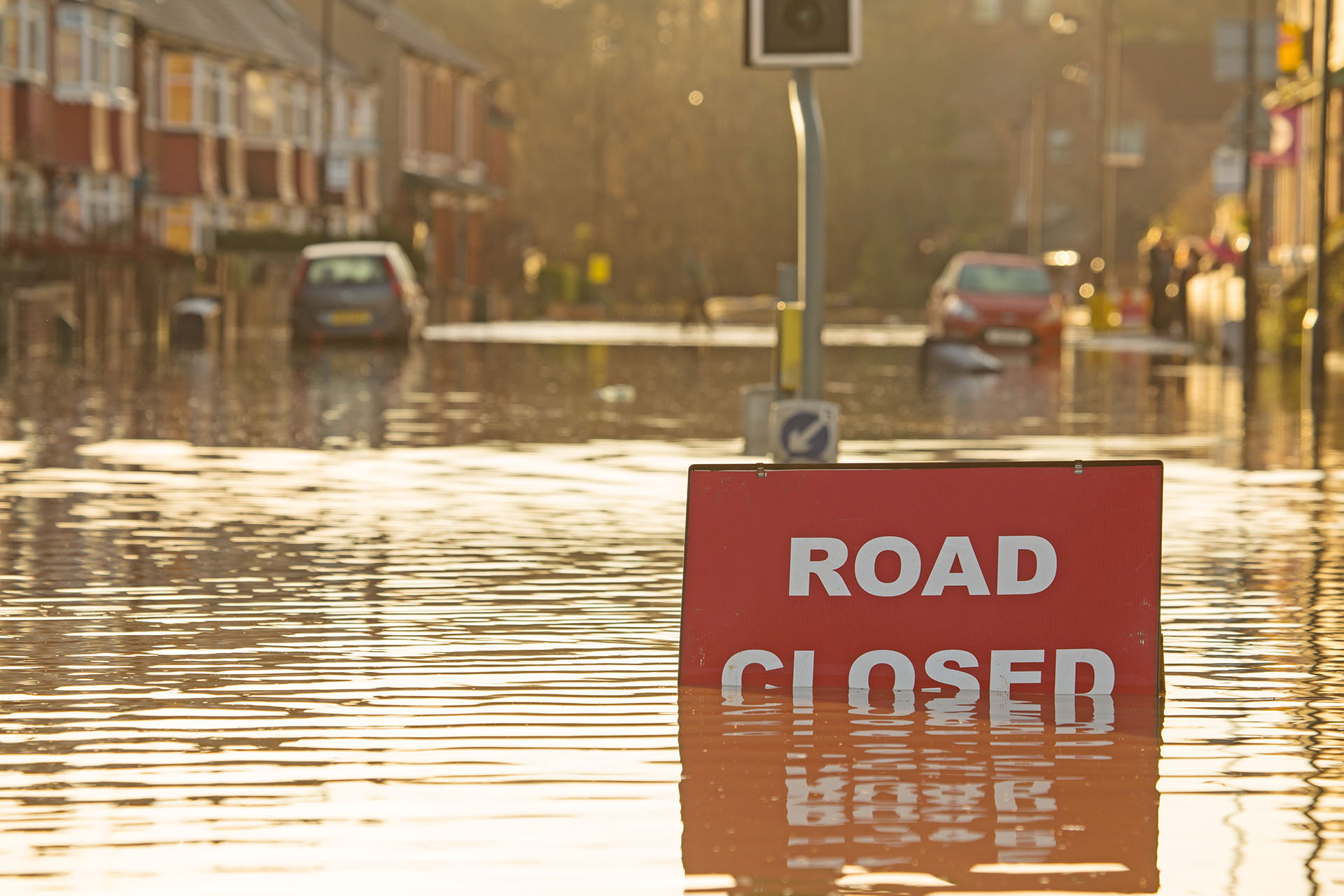
Both operate in regions vulnerable to flooding. Both face similar levels of climate risk. Both publish sustainability reports discussing adaptation and resilience.
Yet one company has invested heavily in strengthening critical infrastructure, redesigning vulnerable facilities, and preparing operations for future climate impacts. The other has not. Which company is more resilient?
It sounds like a simple question.
But despite more than a decade of progress in climate risk analysis, most existing approaches struggle to answer it.
They can tell us where climate risks exist. They can tell us what companies say about those risks. But they often cannot tell us whether a company is genuinely becoming more resilient.
That gap matters. Because resilience is ultimately what determines outcomes.
For the ResilienceArc platform, XDI has been exploring a simple idea: Can we apply the same scientific and engineering rigour used to quantify climate risk to the challenge of quantifying resilience?
For almost twenty years, the XDI team has been at the forefront of developing methodologies to understand how climate hazards translate into damage, disruption and financial impacts. Our work has focused on moving beyond climate data and hazard maps to understand how real-world assets respond to extreme weather, how failures propagate through systems, and how those impacts affect operations and economic performance.
Resilience presents a different challenge.
Unlike risk, resilience is not a directly observable physical phenomenon. It emerges from the interaction of the physical foot-prints of assets, infrastructure and supply chains and how those couple with governance, risk-management, risk-transfer, and adaptation plans and actions. Measuring resilience therefore requires integrating multiple sources of external evidence and engagement with the company's internal thinking. Rising to this challenge sits at the heart of ResilienceArc.
Developed through a partnership between Arc, Earth Capital Nexus at the London School of Economics (LSE) and XDI, the platform combines company asset mapping, physical climate risk analysis, and AI driven corporate disclosure analysis to create one of the first attempts to systematically assess and benchmark corporate resilience at scale.
At its beta launch during London Climate Action Week this June, ResilienceArc includes full resilience assessments for approximately 200 companies, and physical climate risk profiles for more than 2,750 additional companies. The assessment framework draws on more than 200 indicators organised across five dimensions: Assets, Targets, Implementation, Processes and Governance. Together, these companies span 13 major industry sectors, millions of assets and include many of the world's most economically significant corporations.
XDI's contribution begins with identifying and mapping corporate asset footprints. Using proprietary company intelligence capabilities, company assets are identified and linked to physical locations around the world. These assets are then analysed using XDI's high-precision Structural Analysis methodology, a unique engineering-based approach that assesses how climate hazards interact with asset design characteristics to produce damage and disruption outcomes.
Importantly, the analysis extends beyond direct impacts to individual assets. ResilienceArc incorporates indirect risk pathways through the vulnerability of surrounding infrastructure, regional economic systems and trade-linked supply chains. These pathways are represented through XDI's First Mile Indicator (FMI), Regional Economic Indicator (REI) and Supply Chain Proxy (SCP) methodologies, which contribute to the estimation of broader operational impacts to Revenue Impairment.
A central challenge in resilience assessment is translating these underlying risk metrics into indicators that describe resilience itself.
To address this, XDI developed two resilience indicators for use within ResilienceArc.
The first, Asset System Resilience, interprets the distribution of company assets across XDI's risk bands and uses the proportion of High Risk Properties as a central indicator of company-level portfolio resilience. The second, Revenue Impairment, estimates the proportion of annual revenue or productive capacity potentially lost due to direct and indirect physical climate risks, including impacts arising from asset disruption, surrounding infrastructure, regional economic systems and supply chain dependencies.
Together these indicators seek to capture two fundamental dimensions of resilience: the ability of assets to avoid material damage and the ability of operations to continue functioning under disruption.
One of the methodological concepts introduced by XDI through ResilienceArc is what XDI refers to as the "Weakest Link" approach to resilience assessment.
Traditional scoring systems often reward strong performance across multiple categories, allowing strengths in one area to offset weaknesses in another. However, physical resilience does not necessarily behave this way.
A company may have highly resilient assets but remain vulnerable to cascading supply chain failures. Equally, strong governance or targets must not mask a highly exposed and vulnerable asset base unless and until adaptation is achieved.
For this reason, ResilienceArc assesses both a wide range of company disclosure indicators, as well as the ‘weakest link’ Asset System Resilience and Revenue Impairment metrics, with the lower-performing indicator determining the overall resilience position.
The objective is not to produce a perfect measure of resilience, nor is this the last word. Resilience remains a complex and evolving concept.Rather, the objective is to create a transparent, evidence-based framework that allows resilience to be assessed, compared and improved over time.
The climate risk community has spent the last decade building increasingly sophisticated methods for understanding risk.
The next decade will require equally rigorous approaches to understanding resilience.
ResilienceArc represents one step towards that goal.
Related posts

XDI launches Automated Resilience in the XDI Climate Risk Hub. Here's why it matters.
From Australian homes to commercial assets: the adaptation challenge
The Missing Metric: Why measuring climate risk is no longer enough

Measuring resilience requires more than one perspective
Contact us
Get in touch with one of our friendly team


Help & Support
Support and help for our customers
Get support
Complete the form so we can connect you to the right specialist to support your distinct needs.


Media & Press
Fill in the form to get in touch with our media team
Contact our media team
We have an experienced communication and media team that can assist with media enquiries.