
Billions flowing into AI infrastructure may be overlooking growing climate risks, XDI analysis finds
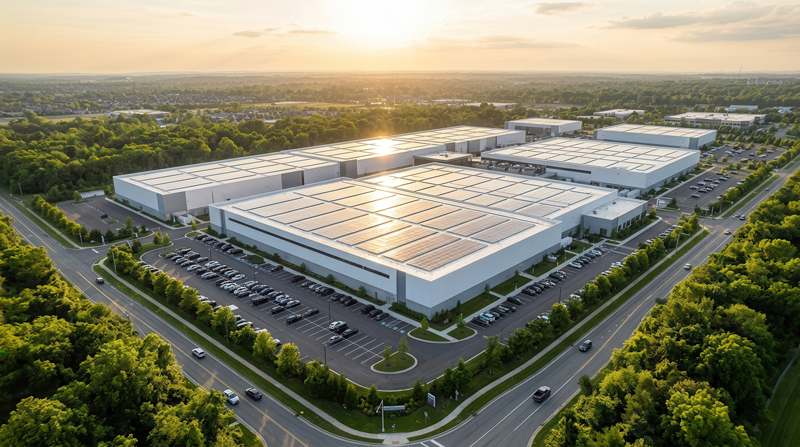
New XDI report identifies climate risk hotspots across the world's data centre investment boom.
(LONDON: Thursday, 18 June 2026) - Billions of dollars are flowing into the global AI infrastructure boom, but a new XDI analysis released ahead of London Climate Action Week warns some of the world's fastest-growing data centre investment hubs are also emerging as climate-risk hotspots.
The 2026 XDI Global Analysis of Planned Data Centres for Physical Climate Risk and Resilience examined 2,595 planned data centres worldwide, identifying locations where either physical damage to the built infrastructure due to direct climate impacts, or operational disruption due to heat or indirect risks, could increasingly challenge long-term infrastructure performance, insurability and operational continuity.
According to this analysis, major global investment hubs are emerging as climate-risk hotspots: some of the world's fastest-growing destinations for data centre investment also record elevated and growing concentrations of physical climate risk. These include Oklahoma, Louisiana, Kansas and NY in the US; Nouvelle-Aquitaine and Hauts-de-France in France; Seoul and Gyeonggi-do in South Korea; Lazio in Italy; Rio in Brazil; Berlin in Germany; Querétaro in Mexico; and Alberta and British Columbia in Canada.
"The global race to build AI infrastructure is accelerating at extraordinary speed," said Dr Karl Mallon, Founder and Head of Science and Technology at XDI.
"Much of the debate has focused on energy demand and water consumption. But physical climate risk is becoming an increasingly important consideration in its own right. The question is no longer simply where the next generation of digital infrastructure gets built, but whether those assets can remain operational, insurable and economically resilient over their intended life."
Key findings:
- Globally, 6% of planned data centres are modelled as “high risk” in 2026 under low-resilience construction settings (154 out of 2595).
- South East Asia, East Asia and South Asia have the highest proportion of data centres at high risk, at 20%, 13% and 12% respectively. This risk is modelled to triple or more in these regions by the end of the century, highlighting the importance of climate due diligence as investment accelerates.
- While it currently has “only” 7% of planned data centres at high risk, Europe is exposed to a 289% increase in average damage risk by 2100, with multiple hubs showing sharp concentrations of risk E.g., France attracted US$69 billion in foreign data centre investment in 2025 - more than any other country in the world - yet 26% of planned facilities analysed are classified as high risk in 2026 under low-resilience settings (and 18% even under high-resilience settings).
- Meanwhile, the United States is home to almost half of high-risk planned data centres globally (69), and has nine states recording 20% or more of planned facilities at high risk.
- Extreme heat is an increasingly important operational challenge for digital infrastructure. Planned data centres analysed in Brazil, India, Mexico, Indonesia and Spain record some of the highest projected operational disruption risk globally, with 75% or more of assets analysed classified as high risk today and risk projected to escalate rapidly over time. Yet some of the most rapid increases in modelled risk linked to heat are projected in markets not traditionally viewed as major heat-risk hotspots for data centre operations, including France, Canada and Australia.
- Indirect risk has long been underestimated - a data centre's resilience depends not only on the facility itself, but also on the electricity, telecommunications, water, transport and supply-chain systems it relies upon. A separate XDI analysis of 138 existing and planned data centres across Europe showed that, when indirect risk is included, productivity loss is modelled as being 10 times higher than when considering direct risk on its own.
- Resilience can materially improve outcomes - site selection, engineering standards and resilience investment can significantly reduce projected physical climate risk before construction begins.
As data centres grow in scale and concentration of value, insurers are paying increasing attention to catastrophe exposure and operational risk. Swiss Re projects global insurance premiums associated with data centre infrastructure could rise from US$10.6 billion today to US$24.2 billion by 2030.
"Future risk is not fixed," said Mallon.
"Unlike existing infrastructure, planned data centres create a window of opportunity. Decisions made today about site selection, engineering standards and resilience investment may materially influence future performance, insurability and operational continuity."
END
Related posts

XDI launches Automated Resilience to prioritise adaptation investment across entire portfolios
ResilienceArc launches at London Climate Action Week – a new platform built by Arc, Earth Capital Nexus (LSE) and XDI
XDI, Morningstar Sustainalytics and Veridion collaborate to deliver enhanced physical climate risk metrics
Billions flowing into AI infrastructure may be overlooking growing climate risks, XDI analysis finds
Contact us
Get in touch with one of our friendly team


Help & Support
Support and help for our customers
Get support
Complete the form so we can connect you to the right specialist to support your distinct needs.


Media & Press
Fill in the form to get in touch with our media team
Contact our media team
We have an experienced communication and media team that can assist with media enquiries.